
Qi2.2 Market Explosion: 637 Certified Products and the Industry Transformation Behind the Numbers
February 2026 marked a watershed moment for the wireless charging industry: global Qi2.2 certified product count crossed 637 units, while total Qi2 certifications reached 2,197—six times the adoption rate of the original Qi standard at an equivalent time post-launch. This article analyses the market data driving this inflection point, examines the technology standardization milestones from WPC's Beijing meetings, and explores how enterprise procurement of Qi2.2 solutions is reshaping corporate IT infrastructure. Elecdov's market data analysis shows that 2026 will be the year wireless charging moves decisively from consumer novelty to institutional-grade infrastructure.
Quick Navigation
The Numbers Behind the Surge: Qi2.2 Market Data Analysis
WPC Beijing Summit: Standardization Milestones and the Road to Qi 50W
Enterprise Procurement: Why IT Departments Are Adopting Qi2.2 at Scale
Supply Chain Dynamics: From Consumer to Institutional Adoption
Regional Market Analysis: Asia-Pacific Leads the Qi2.2 Charge
1. The Numbers Behind the Surge: Qi2.2 Market Data Analysis
Raw certification data tells a compelling story. As of February 2026, the Wireless Power Consortium's official registry recorded 637 Qi2.2 certified products globally—a figure that represents the entire product lifecycle from initial certification filings to final consumer availability. The December 2025 monthly data release was particularly notable: 111 new Qi2 certifications were registered in a single month, with over 60% representing Qi2.2-compliant products, signaling a decisive industry pivot toward the new standard.
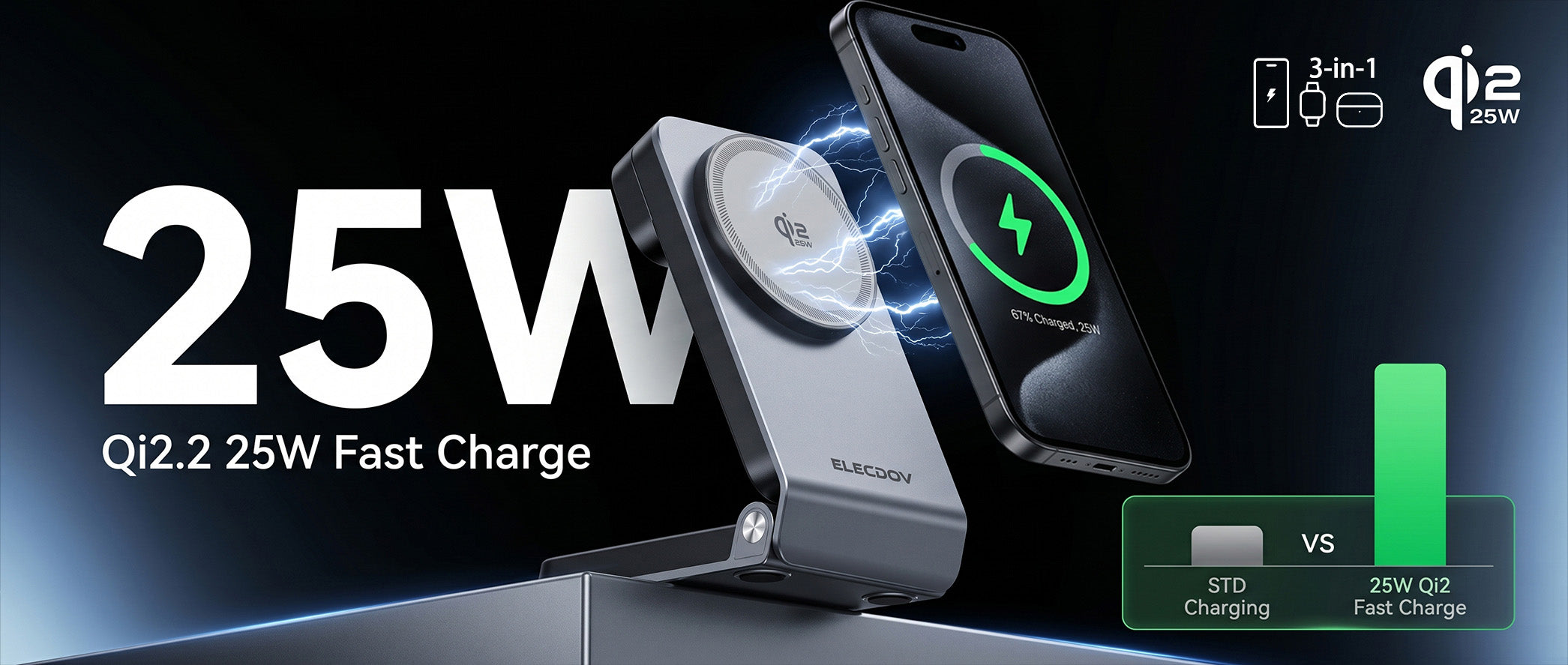
When viewed alongside the 2,197 total Qi2 certifications recorded by the WPC, the adoption velocity becomes clear. According to WPC's own published data, Qi2 achieved its first 2,000 certifications in approximately 18 months post-launch—a pace six times faster than the original Qi standard reached the same milestone. Industry analysts attribute this accelerated adoption to three converging factors: mandatory thermal performance specifications that resolved long-standing consumer pain points, magnetic alignment that eliminated the "does it charge?" frustration, and the involvement of Apple as an early Qi2 launch partner in 2023.
The 2025 Qi2.2 expansion introduced a fourth accelerant: the endorsement of Samsung Galaxy and Google Pixel flagship devices as Qi2.2-compliant at launch. With Apple's iPhone 16 series, Samsung's Galaxy S26 lineup, and Google Pixel 10 Pro XL all supporting 25W wireless charging natively, the smartphone industry achieved rare standards harmonization that had eluded the wireless charging market for a decade.
Category Breakdown: Where the Growth Is Happening
Qi2.2 certification data reveals a diverse product landscape. The 637 certified products span six primary categories: multi-device charging stations (the largest segment), single-device chargers, vehicle wireless chargers, power banks with wireless output, desktop charging pads, and charging modules for integration into third-party products. Multi-device three-in-one stations have seen the highest growth rate since Qi2.2's introduction, reflecting consumer demand for consolidated charging solutions that reduce cable clutter across smartphone, smartwatch, and earbuds ecosystems.
2. WPC Beijing Summit: Standardization Milestones and the Road to Qi 50W
In June 2026, the Wireless Power Consortium convened its Qi Off-cycle Meeting at Xiaomi's Beijing headquarters—an event that brought together over 200 engineers, product managers, and standards representatives from 40+ countries. The meeting, hosted alongside Plugfest and interoperability testing sessions, produced several significant announcements that will shape the wireless charging landscape through 2030.

The most consequential announcement was the WPC's formal roadmap toward Qi 50W wireless charging, targeted for IEC international standard publication in 2028. This represents a doubling of the current Qi2.2 25W ceiling and is expected to unlock wireless charging for a new category of devices: tablets, thin-client laptops, and portable monitors. The WPC confirmed that the Qi 50W specification will maintain full backward compatibility with Qi2.2, Qi2, and legacy Qi devices—preserving the ecosystem investment that enterprises and consumers have made in current-generation hardware.
Additionally, the Beijing summit advanced two extension specifications: Qi2 Extended Range (for spatial freedom beyond 5mm alignment tolerance) and Qi2.2 for Automotive (a dedicated automotive-grade variant with enhanced vibration tolerance and wider temperature operating range). Both are expected to reach candidate draft status by late 2026, with final specification publication in 2027.
IEC Conversion: The Final Legitimization
A critical milestone that receives insufficient attention in mainstream coverage is the formal conversion of Qi2 to an IEC (International Electrotechnical Commission) international standard in late 2024. This conversion—equivalent to the process completed by Qi 1.0 in 2015—grants Qi2 the status of a globally recognized technical standard, enabling government procurement specifications, enterprise IT policy references, and regulatory frameworks to reference a concrete, versioned specification rather than a consortium trademark. This institutional legitimacy is the foundation upon which the current enterprise procurement wave is being built.
3. Enterprise Procurement: Why IT Departments Are Adopting Qi2.2 at Scale
Consumer adoption numbers, while impressive, understate the transformative impact of Qi2.2 on enterprise technology procurement. Corporate IT departments are increasingly specifying Qi2.2-certified wireless charging as standard equipment for desk infrastructure—a shift that represents a fundamental change in how organizations think about endpoint power delivery.
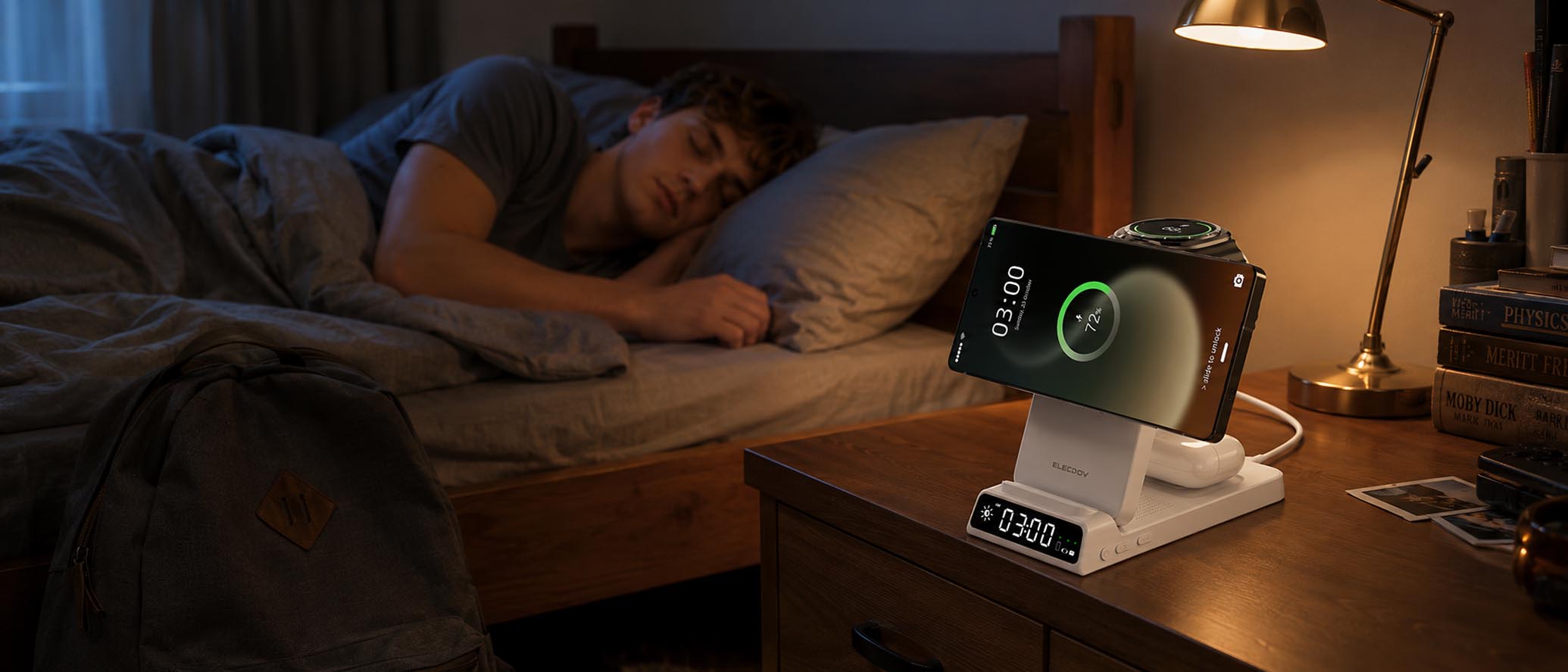
The driving factor is not novelty—it is operational efficiency and liability reduction. Qi2.2's mandatory thermal performance specification eliminates the risk of surface overheating that previously made wireless chargers a concern for corporate safety audits. The WPC certification documentation—which is included with every Elecdov enterprise order—provides the compliance evidence that IT procurement teams need for regulatory submissions and insurance documentation.
Enterprise Procurement at Scale: Elecdov's B2B Program
Elecdov's enterprise procurement program addresses the specific needs of IT departments deploying Qi2.2 infrastructure across large organizations:
- Volume Discounts: Starting at 10 units with escalating price tiers up to 500+ unit deployments. The program is designed for both pilot programs (10-49 units) and enterprise-wide rollouts (500+ units).
- WPC Qi2.2 Certification Documentation: Full compliance certificates, test reports, and WPC registration IDs are included with every enterprise order—essential for IT compliance audits.
- Dedicated Account Manager: A single contact manages the full procurement lifecycle from quotation through delivery and post-purchase support.
- Flexible Delivery: Multi-site split shipments, phased delivery schedules, and blind shipping options for organizations managing dozens of office locations.
- Custom Branding: Logo etching or pad printing on housing surfaces, custom retail packaging, and branded collateral—available at 50+ unit orders.
- Extended Warranty: 3-year and 5-year extended warranty options with advanced replacement service, reducing device lifecycle management overhead.
For IT procurement inquiries, contact Elecdov's enterprise team at elecdov.com/pages/contact.
Elecdov's enterprise program has documented a compelling ROI case: organizations that deploy Qi2.2 wireless charging stations at employee desks report measurable reductions in cable-related IT support tickets, reduced USB port wear on company-provided laptops, and improved employee satisfaction scores related to workspace quality. For organizations with bring-your-own-device (BYOD) policies, Qi2.2's ecosystem-agnostic charging standard—supporting Apple, Samsung, and Google devices on the same infrastructure—eliminates the need for multiple charger types across the workforce.
The Managed IT Environment Consideration
Large organizations operating managed IT environments have additional requirements. Elecdov's Tier 3 enterprise customization program, requiring a minimum of 500 units, addresses this with custom firmware versions that implement organization-specific LED behavior, power management policies, NFC device inventory tagging, and power-on authentication protocols. These firmware customization capabilities—enabled by a dedicated 12-16 week development and integration process—represent the most sophisticated level of enterprise Qi2.2 deployment currently available.
4. Supply Chain Dynamics: From Consumer to Institutional Adoption
The wireless charging supply chain has undergone structural changes in response to Qi2.2's institutional adoption. Three dynamics are reshaping how products move from manufacturing to enterprise deployment.

First, magnetic coil yields have improved dramatically. The Qi2.2 standard's thermal requirements demand tighter manufacturing tolerances than previous generations, but two years of production learning have brought defect rates down to levels that make high-volume enterprise deployment economically viable. Elecdov's production lines now achieve coil alignment tolerances of ±0.3mm—significantly tighter than the ±1.0mm standard for Qi2—enabling the consistent magnetic snap performance that enterprise users expect.
Second, GaN (Gallium Nitride) power delivery components have reduced charger heat generation and size by approximately 30% compared to silicon-based designs from 2024. This size reduction is significant for enterprise environments where desk space is at a premium and charger footprint directly impacts deployment feasibility. The Elecdov W103S exemplifies this evolution: a Qi2.2 25W single-device charger that fits in a shirt pocket while delivering performance that previously required a substantially larger desktop unit.
Third, certification throughput at WPC-accredited test laboratories has scaled to meet demand. The 111 new Qi2 certifications in December 2025 required laboratory capacity that did not exist two years prior. WPC's expansion of its authorized test lab network—including new facilities in Shenzhen, Seoul, and Amsterdam—has reduced average certification timelines from 14 weeks to approximately 8 weeks, accelerating time-to-market for new products.
Price Erosion and Market Maturation
As with all consumer electronics categories, the Qi2.2 market is experiencing predictable price erosion as scale increases and component costs decline. However, the premium segment—characterized by WPC-certified products with full thermal compliance documentation, premium materials, and multi-year warranties—has maintained price stability. This bifurcation suggests that the market is maturing into two distinct tiers: commodity Qi2.2 chargers competing on price, and premium certified solutions competing on compliance assurance, longevity, and enterprise support—a dynamic that favors Elecdov's quality-focused positioning.
5. Regional Market Analysis: Asia-Pacific Leads the Qi2.2 Charge
Geographic analysis of Qi2.2 certification data reveals a clear leadership pattern: the Asia-Pacific region—led by China, South Korea, and Japan—accounts for the majority of new Qi2.2 product introductions, driven by the presence of major smartphone manufacturers headquartered in these markets.
Samsung's Galaxy ecosystem strategy has been particularly influential. The company's decision to make Qi2.2 magnetic charging a standard feature across the Galaxy S26, Galaxy Z Fold7, and Galaxy Watch lineup—rather than a proprietary alternative—created immediate demand for compatible third-party charging infrastructure across the Samsung user base of over 500 million active devices globally. This Samsung-driven demand has been the single largest catalyst for Qi2.2 accessory market growth in 2025-2026.
Google's adoption of Qi2.2 in the Pixel 10 series added a second major Android OEM to the standard's flagship ecosystem support. The combination of Samsung and Google flagships supporting Qi2.2 at launch has effectively given the standard dual-platform endorsement within the Android ecosystem—a scenario that wireless charging advocates had sought for years.
Western Market Adoption Patterns
In North America and Europe, adoption follows a different pattern: consumer-driven demand is the primary vector, with enterprise procurement following 12-18 months later. Apple iPhone's early Qi2 adoption (starting with iPhone 15 in 2023) established magnetic charging as a mainstream expectation among Western consumers, and the subsequent iPhone 16 series' upgrade to Qi2.2 support has driven accessory market growth in the premium segment. European enterprise adoption is additionally shaped by WEEE and product safety regulations that favor WPC-certified products with documented thermal performance—creating a regulatory tailwind for Qi2.2 in corporate procurement.
6. What's Next: Qi 50W, Extended Range, and the 2028 Horizon
With 637 Qi2.2 products certified and the standard achieving mass adoption in under 18 months, the industry is already looking toward the next horizon. The WPC's Qi 50W initiative, targeting IEC publication in 2028, represents the most ambitious wireless charging standard expansion since the original Qi launch in 2010.
The Qi 50W specification targets device categories currently beyond wireless charging's practical reach: tablets with 10,000mAh+ batteries, thin-client laptops, portable monitors, and high-capacity power banks. The engineering challenge is significant—delivering 50W of wireless power requires addressing thermal management at power levels five times higher than current Qi2.2, and the regulatory emissions constraints under FCC Part 18 and equivalent international standards become substantially more complex at these power levels.
Elecdov is actively participating in the WPC working groups developing the Qi 50W specification, contributing thermal management architecture data and enterprise deployment use cases that inform the standard's requirements. The company's current CE20S three-in-one charging station—with its independent thermal circuits and 25W + 15W + 5W triple-zone architecture—represents the engineering foundation that will scale toward 50W output in future product generations.
Extended Range: The Holy Grail of Wireless Power
Qi2 Extended Range, expected in WPC candidate draft form by late 2026, addresses a different consumer desire: spatial freedom. Current Qi and Qi2 standards require the receiver device to be within 5mm of the charging surface—meaningful improvement over the 2mm free-positioning tolerance of original Qi, but still requiring deliberate device placement. Extended Range aims to enable charging at distances up to 30mm, opening the possibility of charging pads installed beneath desk surfaces or nightstands—completely invisible yet fully functional. This development, combined with the 2028 Qi 50W specification, could define the wireless charging landscape for the following decade.
Qi Standard Evolution: Key Milestones and Specifications
| Specification | Qi 1.0 (2010) | Qi 1.2 (2015) | Qi2 (2023) | Qi2.2 (2025) | Qi 50W (Target 2028) |
|---|---|---|---|---|---|
| Max Power Output | 5W | 15W (Extended) | 15W | 25W | 50W |
| Alignment Mechanism | Free-positioning | Registered рез. | Magnetic (MPP) | Magnetic (Enhanced) | To be defined |
| Thermal Limit | Not specified | Not specified | Not specified | <40°C at 25W | To be specified |
| IEC Standard Status | IEC 63013 (2017) | Maintained | IEC conversion 2024 | Under development | Target 2028 |
| Primary Device Category | Feature phones | Smartphones | Flagship smartphones | Multi-device ecosystem | Tablets, laptops |
| Time to 2,000 Certifications | ~10 years | ~4 years | ~18 months | In progress | TBD |
Regional Wireless Charging Market: Adoption Drivers by Region
| Region | Primary Adoption Driver | Key Device Ecosystem | Dominant Product Category | Enterprise Adoption Status |
|---|---|---|---|---|
| Asia-Pacific (China/Korea/Japan) | OEM flagship mandates | Samsung Galaxy, Google Pixel | 3-in-1 multi-device stations | Early majority |
| North America | Consumer ecosystem (Apple) | Apple iPhone, Apple Watch | 3-in-1 Apple-focused stations | Early majority |
| Europe | Regulation + consumer demand | Mixed (Apple, Samsung, Google) | Multi-device universal stations | Growing |
| Middle East | Consumer premium demand | Samsung Galaxy, Apple iPhone | Premium single-device chargers | Emerging |
| Latin America | Emerging consumer market | Mixed entry-level Android | Budget Qi chargers | Early stage |
Frequently Asked Questions
Q1: How does Qi2.2's 25W compare to wired fast charging speeds?
At 25W wireless output, Qi2.2 delivers approximately 25-30 minutes to reach 50% battery on a Samsung Galaxy S26 or Google Pixel 10 Pro XL—comparable to a 25W wired USB-C charger. The wireless convenience comes with a small efficiency loss (typically 70-80% of wired efficiency), meaning wireless charging takes slightly longer than wired for a full charge cycle, but the difference is marginal for typical overnight or desk-charging scenarios.
Q2: What is the difference between Qi2 and Qi2.2 certification?
Qi2 certification covers the magnetic alignment (MPP) protocol at up to 15W output. Qi2.2 extends this to 25W output while introducing the industry's first mandatory thermal performance specification (device surface temperature below 40°C at 25W sustained output) and enhanced Foreign Object Detection. All Qi2.2 products are also Qi2-certified; the reverse is not true.
Q3: How does enterprise procurement of Qi2.2 chargers work at scale?
Elecdov's enterprise program begins at 10-unit minimum orders with volume pricing tiers. Enterprises receive WPC Qi2.2 certification documentation (compliance certificates, test reports, WPC registration IDs) included with every order, a dedicated account manager, and flexible delivery options including split shipments across multiple sites. Custom branding and firmware customization are available at higher volume tiers. Contact elecdov.com/pages/contact for a custom quotation.
Q4: When will Qi 50W wireless charging become available to consumers?
The WPC targets IEC international standard publication for Qi 50W in 2028, with consumer products following 12-18 months after specification finalization. Qi 50W will enable wireless charging of tablets and thin-client laptops, representing a significant expansion of the wireless charging addressable market. Qi2.2 products purchased today will remain fully functional; Qi 50W is designed for full backward compatibility.
Q5: Is Qi2.2 backward compatible with older Qi chargers and devices?
Yes. Qi2.2 chargers will charge any Qi, Qi2, or Qi2.2 device. The charging speed will be limited by the device's maximum supported wattage—legacy Qi devices typically charge at 5W, Qi2 devices at up to 15W, and only Qi2.2-certified devices receive the full 25W output. This cross-generational compatibility ensures that enterprise deployments and consumer purchases of Qi2.2 equipment remain valid investments regardless of device mix across an organization.
Recommended Elecdov Solutions for Enterprise & Consumer Deployment
Power Your Infrastructure: Elecdov's Qi2.2 Enterprise & Premium Picks
- Elecdov CE20S — 3-in-1 Magnetic Charging Station for Samsung: Premium 25W + 15W + 5W triple independent zones, aircraft-grade aluminum alloy base, independent thermal circuits, Qi2.2 certified. The flagship enterprise choice for Samsung-centric deployments and executive desk environments. Available for enterprise volume procurement from 10 units.
- Elecdov CE19S-CF — Carbon Fiber 3-in-1 Magnetic Charging Station: Carbon fiber housing with military-grade durability, 25W + 15W + 5W independent zones, superior heat dissipation for high-duty-cycle environments. Designed for heavy-use professional environments and tech-forward corporate aesthetics.
- Elecdov W103S — Magnetic Qi2 Charger for Samsung: Qi2.2 certified 25W single-device charger, ultra-compact form factor, USB-C powered, ideal for hotel rooms, shared workspaces, and travel kits. The go-to device for organizations seeking to standardize on a single compact charger model.
- Elecdov W98S — Samsung Qi2 Certified Three-in-One Magnetic Charging Station: Deep Galaxy OS integration with lock screen charging notifications, 25W + 15W + 5W zones, compact triangular footprint. Recommended for Samsung ecosystem households and IT departments standardizing on the Galaxy ecosystem.
- Elecdov WC01G — 3-in-1 Magnetic Charging Station for Google: Optimized for Google Pixel ecosystem with dedicated zones for Pixel Watch and Pixel Buds, Qi2.2 certified 25W output, matte finish design. The recommended deployment charger for Google-centric enterprise environments and Pixel user households.
Related Articles
Explore Elecdov's Qi2.2 Enterprise Solutions
From pilot programs of 10 units to enterprise-wide deployments of 500+, Elecdov provides the certification documentation, volume pricing, and dedicated support your organization needs.
Contact Elecdov Enterprise Team →


