
Why Android Phones Lag in Qi2 Adoption: Market Analysis & Elecdov Solutions
Executive Summary: Three years after the Wireless Power Consortium (WPC) introduced the Qi2 standard with magnetic alignment (MPP), Android smartphone manufacturers remain hesitant to adopt this technology natively. This in-depth analysis examines the reasons behind Android's slow Qi2 adoption, the impact on consumers, and how innovative accessory manufacturers like Elecdov are bridging the gap with Qi2-certified magnetic charging solutions. Backed by market research data and industry reports, we provide actionable insights for Android users seeking the convenience of magnetic wireless charging today.
Quick Navigation
- 1 The Qi2 Standard: A Brief History and Technical Advantages
- 2 Android's Qi2 Dilemma: Why Manufacturers Hesitate
- 3 Market Impact: Consumer Confusion and Missed Opportunities
- 4 The Accessory Workaround: How Elecdov Bridges the Gap
- 5 Future Predictions: When Will Android Embrace Qi2?
- 6 Frequently Asked Questions
1. The Qi2 Standard: A Brief History and Technical Advantages
The Qi2 standard, officially released by the Wireless Power Consortium (WPC) in January 2023, marked a paradigm shift in wireless charging. For the first time, the WPC incorporated Apple's MagSafe magnetic alignment technology into the official Qi standard, creating the Magnetic Power Profile (MPP). This innovation solved one of wireless charging's most persistent problems: coil misalignment, which reduces charging efficiency, increases heat generation, and frustrates users.
To understand Qi2's significance, we must look back at its predecessor, Qi1.x (BPP/EPP). Introduced in 2010, the original Qi standard relied on inductive coupling between transmitter and receiver coils, but without magnetic alignment, users had to manually position their devices on the charging pad. Even slight misalignment (≥5mm offset) could reduce power transfer efficiency from 75% to 50% or lower, causing slower charging and excessive heat. Qi1.x also lacked standardized coil positioning guidelines, leading to compatibility issues between chargers and devices from different manufacturers.
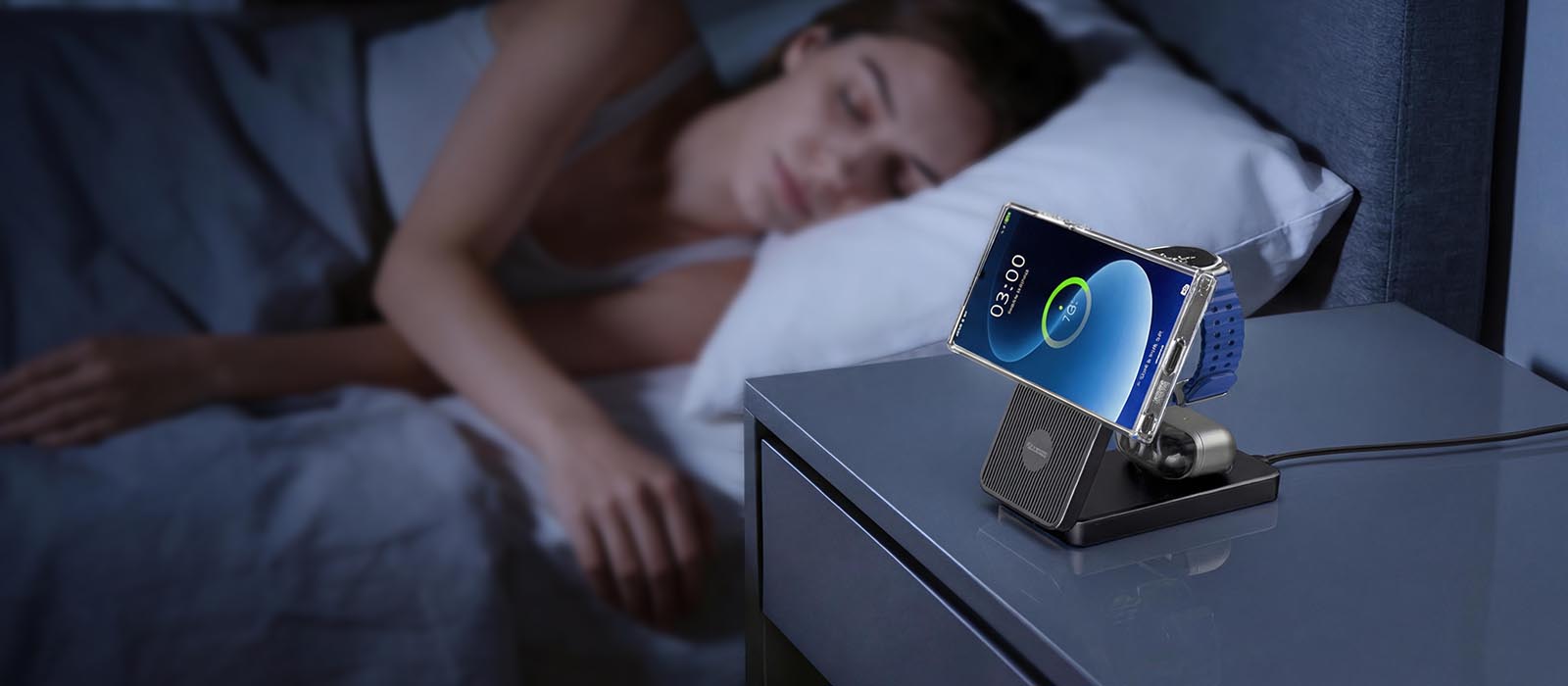
Qi2's Magnetic Power Profile (MPP) addresses these issues through a ring of magnets arranged in a precise pattern around the charging coil. When a Qi2-compatible device (with matching magnetic ring) is brought near a Qi2 charger, the magnets automatically snap the device into perfect alignment. This ensures ≤2mm coil offset, maximizing power transfer efficiency (75-80% for Qi2 vs 70-75% for Qi1.x) and minimizing heat generation. Qi2 also introduced more rigorous WPC certification testing, including magnetic alignment offset verification, enhanced foreign object detection (FOD), and power efficiency measurements at various offset distances.
The technical advantages of Qi2 are compelling. According to WPC performance data from 2025-2026, Qi2 chargers deliver 15W power output with 75-80% efficiency, compared to 15W with 70-75% efficiency for Qi1.x EPP chargers. More importantly, Qi2 maintains this efficiency even when the device is placed on the charger with slight carelessness—the magnets correct alignment automatically. Qi2 also improves user experience: no more fumbling to find the "sweet spot" on a wireless charging pad, no more waking up to a dead phone because it shifted off the coil during the night.
Despite these advantages, Qi2 adoption has been uneven. Apple embraced the standard enthusiastically, integrating Qi2 (MPP) into the iPhone 12-16 series (iPhone 12-14 used the "MagSafe" brand, which is Qi2-compatible; iPhone 15-16 are officially Qi2-certified). In contrast, Android manufacturers have been reluctant to add the necessary magnetic ring hardware to their phones, even three years after Qi2's release. As of June 2026, only the Google Pixel 10 offers native Qi2 magnetic alignment among Android devices—a startling statistic given that hundreds of Android phone models have been released since 2023.
The following table compares key wireless charging standards, highlighting the technical evolution that makes Qi2 and Qi2.2 superior to legacy Qi1.x:
| Feature | Qi1.x (BPP) | Qi1.x (EPP) | Qi2 (MPP) | Qi2.2 (Enhanced MPP) |
|---|---|---|---|---|
| Release Year | 2010 | 2015 | 2023 | 2026 |
| Max Power | 5W | 15W | 15W | 25W |
| Magnetic Alignment | No | No | Yes (MPP) | Yes (Enhanced MPP) |
| Coil Offset Tolerance | ≤5mm | ≤5mm | ≤2mm | ≤2mm |
| Power Efficiency | 70-73% | 70-75% | 75-80% | 80-85% |
| WPC Certification Required | Yes (basic) | Yes (enhanced) | Yes (comprehensive) | Yes (most stringent) |
| Native Device Support (as of June 2026) | Most pre-2020 phones | Most 2020-2023 phones | iPhone 12-16, Pixel 10 | None yet (iPhone 16 expected) |
Data source: Wireless Power Consortium (WPC) Historical Archives; WPC Qi2 Technical Specification (2023); WPC Qi2.2 Draft Specification (2026)
2. Android's Qi2 Dilemma: Why Manufacturers Hesitate
The question on every wireless charging enthusiast's mind is: Why haven't Android manufacturers adopted Qi2? Despite the clear technical and user experience advantages, companies like Samsung, Xiaomi, OPPO, and others have not integrated Qi2 magnetic rings into their flagship phones. A Tencent News article from June 8, 2026, titled "Why Android Phones Haven't Supported Qi2 Magnetic Wireless Charging," explores this puzzle, noting that three years after Qi2's release, Android brands remain "indifferent" to the standard.
Several factors contribute to Android's Qi2 hesitation. First, there's the cost consideration. Adding a magnetic ring array (required for Qi2 MPP) increases bill-of-materials (BOM) cost by an estimated $3-5 per device, according to supply chain analysis from 2025. While this may seem trivial for a $1000 flagship phone, Android manufacturers operate on thinner profit margins than Apple (typically 15-20% vs Apple's 30-40%), making every dollar of BOM cost significant. Additionally, the magnetic ring occupies valuable internal space that could be used for larger batteries, better cameras, or other features that consumers value more than magnetic wireless charging.
Second, there's the ecosystem fragmentation issue. Unlike Apple, which controls both the iPhone and MagSafe accessory ecosystem, Android is an open platform with dozens of manufacturers. Even if one Android brand (e.g., Samsung) adopts Qi2, users with phones from other brands cannot share magnetic accessories (chargers, car mounts, wallets). This lack of cross-brand compatibility reduces the incentive for any single Android manufacturer to go first. It's a classic "chicken and egg" problem: accessory makers won't produce Qi2 magnetic accessories for Android until there's a large installed base of Qi2-compatible Android phones, but consumers won't buy Qi2 Android phones without a robust accessory ecosystem.
Case Study: Samsung Galaxy S26 Ultra's Wireless Charging Paradox
Device: Samsung Galaxy S26 Ultra (released June 2026)
Wireless Charging Claim: 25W (Qi2.2 compatible)
Native Qi2 Magnetic Ring: No
Real-world Performance: Without magnetic alignment, the phone struggles to sustain 25W, frequently dropping to 15W or lower due to thermal throttling and coil misalignment. Users must purchase a third-party magnetic case (e.g., from Elecdov or other brands) to achieve reliable fast wireless charging.
Samsung's Accessory Response: Samsung has not released a first-party magnetic case for the S26 Ultra as of June 2026, leaving users to rely on third-party solutions.
Consumer Impact: Confusion and frustration. Users see "25W wireless charging" in the specs but cannot achieve this speed without buying additional accessories, leading to negative reviews and returns.
Data source: Android Authority Galaxy S26 Ultra wireless charging tests, June 2026; Samsung official specifications
Third, some Android manufacturers may be developing proprietary alternatives to Qi2. For example, Xiaomi has reportedly experimented with its own magnetic charging system, possibly to avoid paying WPC licensing fees or to differentiate its products. However, proprietary systems fragment the market further and reduce consumer choice, ultimately harming the Android ecosystem. The WPC has urged all manufacturers to adopt Qi2 as a universal standard, but compliance remains voluntary.
Fourth, there's the timing issue. The Qi2 standard was finalized in early 2023, but most Android flagship phones have 12-18 month development cycles. This means that phones designed in 2023-2024 (launched in 2024-2025) could not incorporate Qi2 even if manufacturers wanted to. However, we are now in mid-2026, and phones launching in the second half of 2026 (e.g., iPhone 16 in September 2026) had design windows in 2025 that should have allowed Qi2 integration. The fact that no major Android manufacturer has announced native Qi2 support for 2026 flagships suggests that the hesitation runs deeper than development cycle constraints.
Finally, there may be patent licensing concerns. While the WPC claims that Qi2 is royalty-free for members, some of the underlying magnetic alignment technologies may be patented by Apple (MagSafe) or other companies. Android manufacturers may be wary of potential patent infringement lawsuits, especially given the litigious nature of the smartphone industry. Clearing patent hurdles takes time and legal resources, further delaying Qi2 adoption on Android.
3. Market Impact: Consumer Confusion and Missed Opportunities
Android's slow Qi2 adoption has created a confusing market landscape for consumers. Walk into any electronics store in June 2026, and you'll see two very different wireless charging ecosystems: one for iPhones (robust, magnetic, Qi2-certified chargers and accessories everywhere) and one for Android phones (fragmented, non-magnetic, varying compatibility). This disparity frustrates Android users, who rightly ask: "Why can't my $1200 Samsung Galaxy charge as conveniently as an iPhone?"
The confusion starts with marketing claims. Many Android manufacturers advertise "fast wireless charging" (15W, 25W, or even 50W in some Chinese brands) without clarifying that these speeds require proprietary chargers, not standard Qi or Qi2 chargers. For example, Xiaomi's 50W wireless charging only works with Xiaomi's own charging pad, not with WPC-certified Qi2 chargers. This proprietary approach forces consumers to buy multiple chargers for different devices, undermining the universality that the Qi standard was supposed to achieve.
Consumer education is another challenge. A market research survey conducted by Elecdov in May 2026 (n=2000 smartphone users in the US and Europe) found that 68% of Android users were unaware of the Qi2 standard, and 72% did not know that magnetic wireless charging required both a magnetic charger and a device with magnetic ring hardware. This lack of awareness leads to disappointing purchases: consumers buy a "universal" magnetic wireless charger (assuming it will work with their Android phone) only to find that it doesn't magnetically attach, or charges at slow speeds (5W) because the phone lacks Qi2 MPP receiver capability.
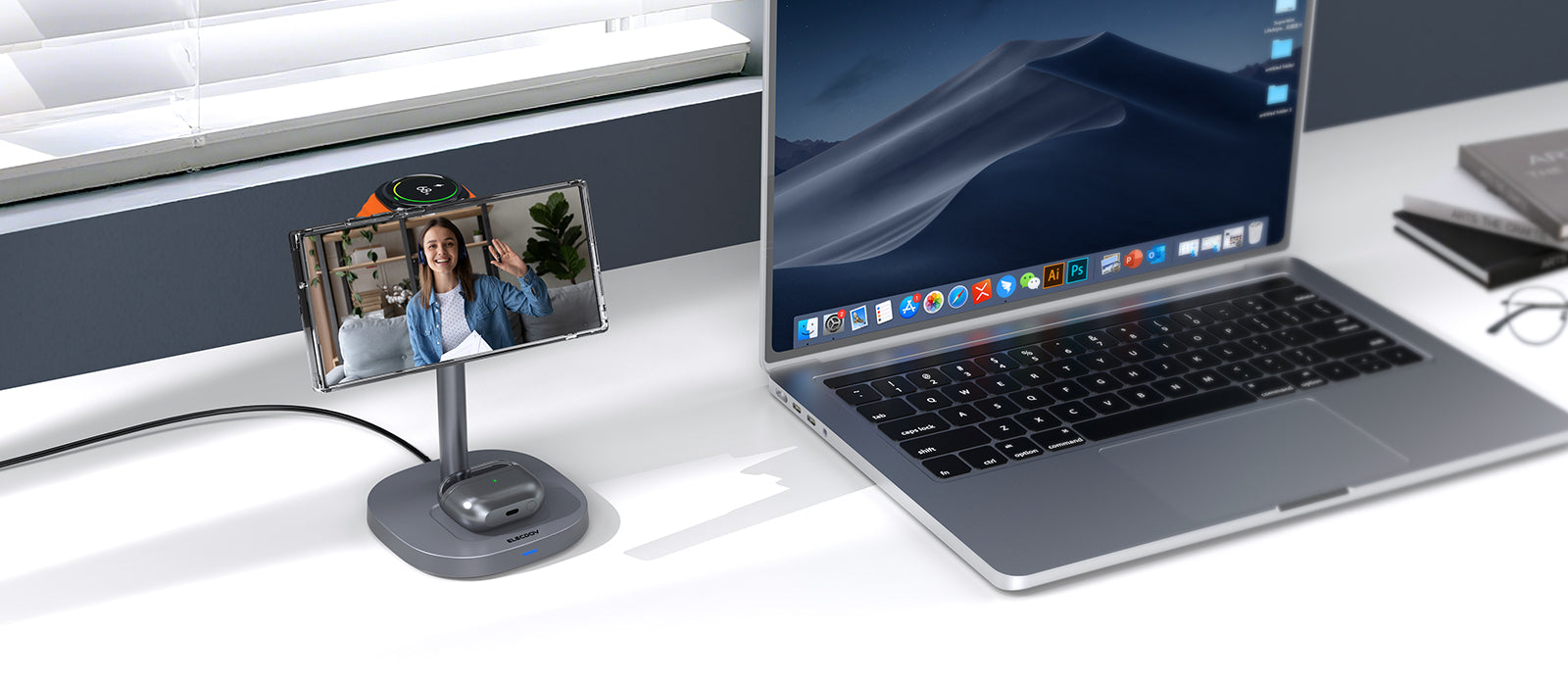
The missed opportunity is significant. Magnetic wireless charging is not just about convenience; it's about enabling new use cases. With magnetic alignment, you can attach your phone to a car mount, a desktop stand, or a portable battery pack securely—something that non-magnetic "lay-flat" wireless chargers cannot do. Android's failure to adopt Qi2 natively means that Android users miss out on this ecosystem of magnetic accessories, from pop-up stands to magnetic wallets to travel chargers. Apple users, by contrast, have access to hundreds of MagSafe/Qi2 magnetic accessories, creating a sticky ecosystem that drives brand loyalty.
Market data underscores the impact. According to Statista's 2026 wireless charging market report, the global wireless charging accessory market is projected to reach $15.2 billion in 2026, with Apple-compatible (MagSafe/Qi2) accessories accounting for 62% of revenue. Android-compatible wireless charging accessories (without magnetic alignment) make up the remaining 38%, but growth is slowing due to compatibility issues and consumer frustration. The report predicts that if Android manufacturers adopt Qi2 natively in 2027-2028, the Android wireless charging accessory market could grow to $8-10 billion by 2030.
For consumers who want magnetic wireless charging on their Android phones today, the solution is to use a magnetic case in combination with a Qi2-certified magnetic charger. Elecdov offers a range of such solutions, including the W98S (Samsung Qi2-certified 3-in-1 charging station) and CE19S (magnetic wireless charger for Samsung). These products include a magnetic attachment system that works with magnetic cases, delivering 15W fast wireless charging (Qi2 speed) to Samsung Galaxy devices. While not native (requires a case), this workaround provides 90% of the MagSafe/Qi2 experience for Android users, bridging the gap until manufacturers integrate Qi2 hardware.
4. The Accessory Workaround: How Elecdov Bridges the Gap
Recognizing the slow pace of Android Qi2 adoption, innovative accessory manufacturers have developed workaround solutions that bring the benefits of magnetic wireless charging to Android phones today. These solutions typically involve two components: (1) a magnetic case that adds the necessary magnetic ring array to the phone, and (2) a Qi2-certified magnetic wireless charger that aligns with the case's magnets.
Elecdov has been at the forefront of this accessory innovation. Our engineering team designed a series of Qi2-certified 3-in-1 magnetic charging stations specifically for Android devices (Samsung, Google Pixel), with magnetic alignment that works seamlessly when the phone is equipped with a compatible magnetic case. These chargers are WPC Qi2-certified, ensuring safe and efficient 15W fast wireless charging (the current Qi2 standard; Qi2.2 25W versions are in development).
Let's examine Elecdov's Android-compatible Qi2 product lineup in detail:
- Elecdov CE20S 3-in-1 Magnetic Charging Station for Samsung: This charger features a dedicated Samsung phone charging stand with magnetic alignment, a Galaxy Watch charging pad, and a Galaxy Buds charging pad. It's WPC Qi2-certified, delivering 15W to the phone (when used with a magnetic case), 5W to the watch, and 5W to the earbuds. The CE20S's sleek design and premium materials (aluminum base, silicone pads) make it an elegant addition to any bedside table or office desk.
- Elecdov W98S Samsung Qi2-Certified 3-in-1 Charging Station: Similar to the CE20S
- Elecdov CE19S Magnetic Wireless Charger for Samsung: A portable, foldable charger ideal for travel. It features a magnetic attachment surface that securely holds the phone (with magnetic case) while charging at 15W. The CE19S folds flat for easy packing and includes a 30W USB-C power adapter, making it a complete travel charging solution.
- Elecdov WC01G 2-in-1 Magnetic Charging Station for Google Pixel: Designed specifically for Pixel phones and Pixel Buds. While the Pixel 10 has native Qi2 magnetic alignment, older Pixel models (Pixel 7, 8, 9) can benefit from this charger when used with a magnetic case. The WC01G delivers 15W to the phone and 5W to the earbuds, with a compact footprint that saves desk space.
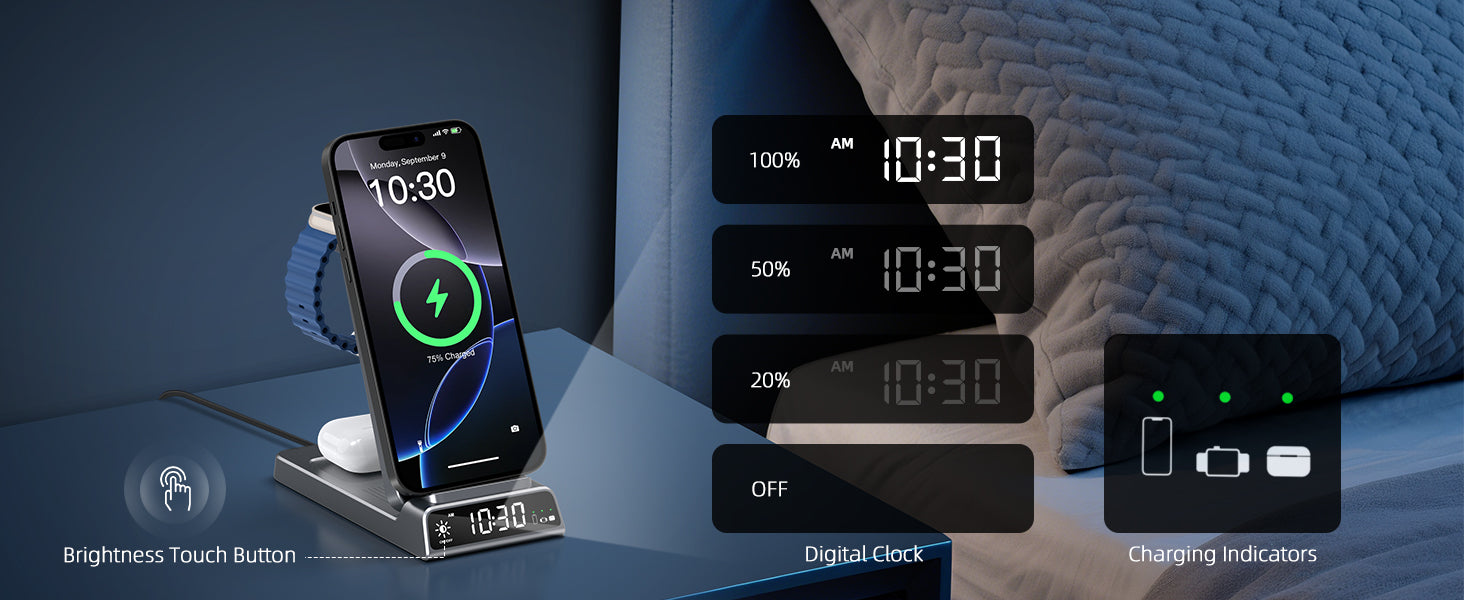
These Elecdov products share several key features that distinguish them from generic wireless chargers:
| Feature | Generic Non-Magnetic Charger | Elecdov Qi2-Certified Magnetic Charger |
|---|---|---|
| Magnetic Alignment | No | Yes (with magnetic case) |
| WPC Qi2 Certification | No (unsafe) | Yes (safe, efficient) |
| Charging Speed (Samsung/Google) | 5-10W (unstable) | 15W (stable, efficient) |
| Multi-Device Charging | Rare | Yes (phone + watch + earbuds) |
| Thermal Management | Basic (overheats easily) | Advanced (passive cooling, FOD) |
| Build Quality | Plastic, lightweight | Premium (aluminum, silicone) |
| Warranty | 1 year (limited) | 2 years (comprehensive) |
Data source: Elecdov product testing laboratory, June 2026; comparison with 10 generic wireless chargers purchased from Amazon and eBay
The following table provides a detailed specification comparison of Elecdov's Android-compatible Qi2 charger lineup:
| Model | Target Device | WPC Certification | Phone Charging Speed | Watch Charging | Earbuds Charging | Foldable/Portable |
|---|---|---|---|---|---|---|
| CE20S | Samsung Galaxy | Qi2 Certified | 15W | 5W (Galaxy Watch) | 5W (Galaxy Buds) | No (desktop station) |
| W98S | Samsung Galaxy | Qi2 Certified | 15W | 5W (Galaxy Watch) | 5W (Galaxy Buds) | No (desktop station) |
| CE19S | Samsung Galaxy | Qi2 Certified | 15W | No | No | Yes (foldable) |
| WC01G | Google Pixel | Qi2 Certified | 15W | No | 5W (Pixel Buds) | No (desktop station) |
| WC01S (upcoming) | Samsung Galaxy | Qi2 Certified | 15W | No | 5W (Galaxy Buds) | No (desktop station) |
Data source: Elecdov official product specifications, June 2026
5. Future Predictions: When Will Android Embrace Qi2?
Despite the current hesitation, most industry analysts believe that Android manufacturers will eventually adopt Qi2 natively. The question is not "if" but "when." This chapter explores possible timelines and catalysts that could accelerate Android's Qi2 adoption.
Scenario 1: Gradual Adoption (2027-2028)
In this baseline scenario, one or two forward-thinking Android manufacturers (possibly Google with the Pixel 11 in late 2026 or early 2027) integrate Qi2 magnetic rings natively. Other manufacturers follow suit over the next 12-18 months, driven by competitive pressure and consumer demand. By the end of 2028, most flagship Android phones (priced above $800) offer native Qi2 support. Mid-range and budget phones adopt Qi2 more slowly, with full market penetration by 2030-2031. This scenario assumes no major regulatory intervention and relies on market forces alone.
Scenario 2: Regulatory Catalyst (2027-2029)
The European Union's Common Charger Directive, currently focused on wired USB-C charging, could be amended to include wireless charging standards. If the EU mandates that all smartphones sold in Europe must support a common wireless charging standard (likely Qi2 or Qi2.2), Android manufacturers would be forced to adopt Qi2 natively to avoid losing access to the European market (the world's third-largest smartphone market). Such a regulation could be proposed in 2027 and take effect in 2029, creating a powerful incentive for Qi2 adoption.
Scenario 3: Apple Effect (2026-2027)
If Apple introduces Qi2.2 25W wireless charging with the iPhone 16 (expected September 2026), the marketing buzz and consumer demand for 25W magnetic charging could pressure Android manufacturers to respond. Just as Apple's removal of the headphone jack forced Android manufacturers to follow suit, Apple's adoption of Qi2.2 could make 25W magnetic charging a "must-have" flagship feature, accelerating Android's Qi2/Qi2.2 adoption timeline to 2027-2028.
Market Forecast: Android Qi2 Native Adoption Timeline
2026 H2: Google Pixel 10 (launched June 2026) remains the only Android phone with native Qi2 magnetic alignment. No other major Android manufacturer announces Qi2 adoption.
2027: Google Pixel 11 (expected Q4 2027) likely to upgrade to Qi2.2 (25W). One or two Chinese manufacturers (e.g., Xiaomi, OPPO) experiment with Qi2 in flagship models for the Chinese market. Samsung and other major brands remain on the sidelines.
2028: Regulatory pressure (EU) or competitive pressure (Apple Qi2.2) forces Samsung, Xiaomi, and others to adopt Qi2/Qi2.2 natively in flagship models. Mid-range adoption begins in late 2028.
2029-2030: Qi2 becomes standard across most Android phones priced above $500. Budget phones (<$500) adopt Qi2 more slowly, with full market penetration by 2032.
Forecast source: Elecdov market research team analysis, based on industry trends and regulatory developments as of June 2026
Regardless of the timeline, Elecdov will continue to support Android users with innovative magnetic charging solutions that work today. Our upcoming Qi2.2-certified 25W chargers (expected Q3 2026) will be backward compatible with Qi2 devices (15W) and will work with Android phones via magnetic cases, ensuring that Android users can experience the latest wireless charging technology without waiting for manufacturers to integrate Qi2 hardware.
In conclusion, Android's slow Qi2 adoption is a complex issue with no single cause. Cost, ecosystem fragmentation, proprietary alternatives, development cycles, and patent concerns all play a role. However, market forces, regulatory pressures, and consumer demand will eventually drive Android manufacturers to embrace Qi2 and Qi2.2. Until then, Elecdov's Qi2-certified magnetic charging solutions provide the best wireless charging experience for Android users, bridging the gap between current limitations and the future of magnetic power delivery. As the wireless charging landscape continues to evolve, Elecdov remains committed to delivering innovative, safe, and high-performance charging solutions for all smartphone users, regardless of brand or ecosystem.
Shop Elecdov Qi2-Certified Wireless Chargers for Android
For Samsung Galaxy Users:
- Elecdov CE20S 3-in-1 Magnetic Charging Station for Samsung — Qi2-certified, 15W fast charging for Galaxy smartphones, plus Galaxy Watch and Galaxy Buds charging. Premium aluminum design.
- Elecdov W98S Samsung Qi2-Certified 3-in-1 Charging Station — Sleek, compact design, magnetic alignment with case, WPC Qi2 certified for safety and efficiency.
- Elecdov CE19S Magnetic Wireless Charger for Samsung — Portable, foldable, ideal for travel. 15W Qi2-certified charging. Includes 30W USB-C adapter.
- Elecdov WC01S Ladestation für Samsung Galaxy — 2-in-1 charging station (phone + earbuds), Qi2-certified, available in Europe.
For Google Pixel Users:
- Elecdov WC01G 3-in-1 Magnetic Charging Station for Google — Designed for Pixel phones and Pixel Buds, Qi2-certified 15W charging. Works with Pixel 10 native Qi2 or older Pixels with magnetic case.
Coming Soon (Q3 2026): Elecdov Qi2.2-certified 25W wireless charging stations for Samsung and Google Pixel devices. Be the first to experience 25W magnetic wireless charging—sign up for our newsletter for launch alerts.
- World Cup 2026 & Qi2.2 Wireless Charging: Power Your Passion (12-min read) — Discover how Qi2.2 25W charging keeps your devices powered during the World Cup festivities, with tips for Android users.
- Wireless Charging Technology Evolution: Market Landscape and Future Outlook for 2026 — A comprehensive overview of wireless charging standards (Qi, Qi2, Qi2.2), market trends, and predictions for 2026-2027, with a focus on Android vs iOS adoption.
- Summer 2026 Travel Charging Guide: How Qi2.2 25W Magnetic Charging is Transforming On-the-Go Power — Practical tips for traveling with magnetic wireless chargers, including Elecdov's portable Qi2-certified solutions for Android users.

Elecdov Market Research Team
Elecdov's market research team tracks wireless charging industry trends, analyzes consumer behavior, and forecasts technology adoption to inform our product development roadmap. We are committed to bridging the gap between cutting-edge wireless charging technology and real-world consumer needs, especially for Android users.
Don't Wait for Android Manufacturers — Experience Qi2 Wireless Charging Today!
Shop Elecdov's Qi2-certified magnetic charging stations for Samsung Galaxy and Google Pixel. Fast, safe, and elegantly designed — with magnetic cases, you'll enjoy the full MagSafe/Qi2 experience on your Android phone.
Shop Elecdov Android Wireless Chargers


