
Qi2.2 Global Adoption 2026: How Apple, Android & the World Are Embracing the New Wireless Charging Standard
Executive Summary: Qi2.2, the latest evolution of the Wireless Power Consortium's (WPC) universal wireless charging standard, reached mainstream adoption in 2026 — delivering 25W peak output that is nearly 70% more powerful than its predecessor. The latest premium flagship smartphones have emerged as the single largest driver of Qi2.2 compatibility, topping global sales charts while dominating independent charging speed benchmarks. Android manufacturers are rapidly building Qi2.2 ecosystems, and certified product counts are climbing across North America, Europe, and Asia. This report examines the international standard landscape, flagship device support, market格局, and what Qi3 (targeting 45–65W) means for the road ahead.
Quick Navigation
- 1 International Standard Dynamics — Qi2.2 Unpacked
- 2 Premium Flagship Smartphones & Qi2.2 — The Fastest Charging Era
- 3 Android's Qi2.2 Push — Major Brands & the Ecosystem
- 4 Global Market Landscape — Brands, Products & Regions
- 5 China Market — MIIT Regulations & the GB 47372-2026 Standard
- 6 Future Outlook — Qi3, Industry Trends & Elecdov Picks
1. International Standard Dynamics — Qi2.2 Unpacked
The Wireless Power Consortium (WPC), a global body with more than 300 member companies, has been the architect of the Qi wireless charging ecosystem since 2008. As of June 2026, the consortium oversees over 13,000 Qi-certified wireless charging products on the global market — a figure that has grown by approximately 40% since the Qi2 standard was introduced in late 2023. The Qi2 update brought Magnetic Power Profile (MPP) technology — a MagSafe-like magnetic alignment mechanism — to the entire Android and iOS ecosystem, standardizing coil alignment and eliminating the charging efficiency losses that plagued first-generation Qi users.
Qi2.2 represents the most significant performance leap in the standard's history. Where original Qi2 capped at 15W, Qi2.2 doubles the output to 25W peak power. According to WPC's official media release, this represents "nearly 70% more power than the original Qi2," enabling genuinely high-speed wireless charging that approaches wired fast-charging speeds for everyday use cases. The first Qi2.2-certified devices began appearing in retail channels in late summer 2025, with mass-market availability accelerating through Q4 2025 and Q1 2026.
The standard is underpinned by strict interoperability requirements. All Qi2.2 products must pass WPC's authorized testing laboratories (ATLs) and display the Qi logo — a consumer guarantee of safety, cross-brand compatibility, and energy efficiency. At CES 2026, Qi2.2 25W chargers from leading brands were among the most prominently featured innovations on the Las Vegas show floor, signaling strong industry backing. The WPC's KBIS 2026 showcase of the parallel Ki Cordless Kitchen standard — targeting kitchen appliances up to 2,200W — demonstrates the consortium's ambitions beyond mobile devices.
Qi Standard Evolution: Qi vs. Qi2 vs. Qi2.2
| Parameter | Qi (Original) | Qi2 | Qi2.2 |
|---|---|---|---|
| Max Power Output | 5W–15W | 15W | 25W |
| Coil Alignment | Free-positioning (inductive) | Magnetic (MPP) | Magnetic (MPP) + Enhanced |
| Energy Efficiency | ~60–70% | ~75–80% | ~80–85% |
| Launch Year | 2008 | Late 2023 | Late 2025 (certification started) |
| Certified Products (as of mid-2026) | 8,000+ | 3,500+ | 1,200+ (growing rapidly) |
| Device Support | Universal (legacy) | Qi2 iPhones (14 series+), select Android | iPhone 17 series, Samsung S26, Google Pixel 10 |
Table 1: Qi Standard Evolution — from Original Qi to Qi2.2 (Source: WPC, Elecdov Research, 2026)
Qi2.2 also introduces improved foreign object detection (FOD) and thermal management protocols, addressing safety concerns that have historically slowed enterprise and automotive wireless charging adoption. The standard maintains backward compatibility with all Qi and Qi2 devices, ensuring that a Qi2.2 charger remains functional for older smartphones, earbuds, and smartwatches — a critical factor for households with mixed-device ecosystems.
2. iPhone 17 & Qi2.2 — Apple's Fastest Charging Era
Apple's iPhone 17 series, launched in September 2025, represents the company's most aggressive commitment to wireless charging performance to date. In independent testing conducted by CNET Labs across 33 current smartphones, the iPhone 17 Pro earned the title of fastest overall charging phone — a remarkable achievement given the competitive landscape. When wired and wireless charging results were averaged, the iPhone 17 Pro outperformed every Android flagship tested, including Samsung's Galaxy S26 Ultra and the OnePlus 15.
Specifically, the iPhone 17 Pro achieved a 74% battery replenishment in 30 minutes using a wired connection with a 30W+ power adapter — placing it second only to the Galaxy S26 Ultra's 76% in the wired category. More impressively, for wireless charging, the iPhone 17 Pro added 55% charge in 30 minutes using a MagSafe-compatible Qi2.2 charger — the fastest wireless result in the entire test cohort. Apple took four of the top five positions for wireless charging speeds, with the iPhone 17 Pro Max at 53%, the standard iPhone 17 at 49%, and the iPhone Air at 47%. CNET analysts attributed Apple's dominance to the precision of its MagSafe alignment mechanism, which maintains optimal coil positioning throughout charging and reduces energy loss due to misalignment.
The iPhone 17 series benefited from Apple's A19 Bionic chip, which features optimized power management and more efficient charging pathways. Combined with iOS 26's refined battery health algorithms, the iPhone 17 lineup supports sustained 25W Qi2.2 wireless charging without excessive thermal throttling — a challenge that plagued earlier generations. Counterpoint Research reported that the iPhone 17 was the world's best-selling smartphone in Q1 2026, overtaking even the iPhone 17 Pro Max, driven by strong mid-tier appeal and broad carrier promotions across North America, Europe, and Latin America.
WWDC 2026 (June 2026) further reinforced leading tech companies' wireless charging ambitions. While the event's primary focus was on macOS Golden Gate and iOS 26, major smartphone manufacturers announced expanded MagSafe accessory partnerships and confirmed that their premium wireless earbuds and smartwatches both support Qi2.2 charging. Industry executives, speaking to investors in May 2026, cited premium flagship charging performance and ecosystem integration as key factors in achieving a record first-quarter smartphone revenue — with leading manufacturers capturing nearly half of total industry smartphone revenue globally during Q1 2026.
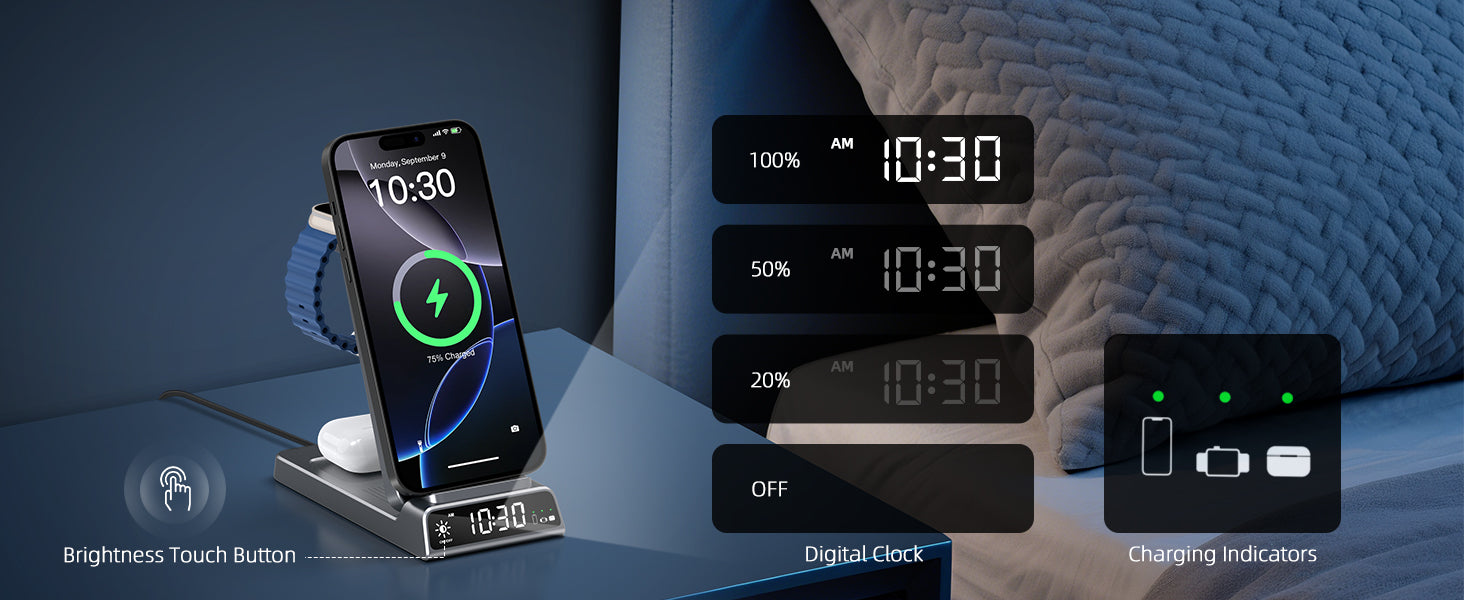
The Elecdov CE19A 3-in-1 Magnetic Charging Station supports Qi2.2 25W MagSafe-compatible charging for premium flagship smartphones, smartwatches, and wireless earbuds simultaneously.
3. Android's Qi2.2 Push — Major Brands & the Ecosystem
The Android camp has responded to charging benchmark dominance from leading manufacturers with its own wave of Qi2.2-certified flagship devices. Android flagship devices launched in early 2026 achieved the fastest wired charging results in independent benchmark testing — recovering 76% battery in 30 minutes — but wireless performance lagged at 39% in the same 30-minute window. This gap underscores a traditionally stronger focus on wired charging innovation and the ongoing challenge of thermal management in high-wattage wireless solutions for Android devices.
Several Android flagship devices were among the first to officially support Qi2 25W wireless charging at launch. Powered by next-generation chips, these models were designed with Qi2.2 compatibility as a headline feature — a strategic move to compete directly with the MagSafe ecosystem from leading manufacturers. Flagship charging accessories were updated via firmware patches in early 2026 to deliver full 25W Qi2.2 output, making these devices some of the most capable Android wireless charging options on the market. The integration of AI-powered Adaptive Charging also optimizes long-term battery health by learning user charging patterns.
Beyond these brands, the Android Qi2.2 ecosystem is expanding rapidly through mid-range devices. OnePlus, Motorola, and Xiaomi have all announced Qi2.2 certification for their 2026 flagship and upper-mid-range lineups. Various models achieved a notable 72% wired charge in 30 minutes in independent benchmark testing, demonstrating that Android manufacturers continue to push the boundaries of fast-charging technology. The fragmentation of the Android Qi2.2 landscape — with different manufacturers adopting the standard at different timelines and wattages — creates both opportunities and challenges for third-party accessory makers like Elecdov, who must design products that are broadly compatible across the Android ecosystem.
From a market perspective, Android's adoption of Qi2.2 is accelerating because it solves a critical problem: the proprietary wireless charging ecosystems that previously made Android wireless charging inferior to wired charging. Brands now offer Qi2.2-compatible accessories that deliver meaningful fast-wireless experiences, removing one of the last remaining arguments for wired-only charging. The broad adoption of the Qi2 Magnetic Power Profile across Android flagships also means that accessories like the Elecdov W98S — a Qi2-certified three-in-one magnetic charging station — can serve multiple Android brands simultaneously.
4. Global Market Landscape — Brands, Products & Regions
The Qi2.2 accessory market in 2026 features a diverse range of established consumer electronics brands that have invested heavily in WPC certification. According to Elecdov's market monitoring, leading accessory manufacturers have collectively driven the majority of Qi2.2-certified charging accessories on the market as of mid-2026. These brands benefit from early WPC membership, established retail distribution networks, and strong brand recognition among consumers willing to pay premium prices for certified products.
The geographic breakdown reveals distinct adoption patterns. In North America, Qi2.2 accessory sales have been driven by strong premium flagship smartphone uptake and retail partnerships between accessory brands and major carriers (AT&T, Verizon, T-Mobile). The United States represents the single largest market by revenue for Qi2.2 accessories. In Europe, regulatory pressure from the EU's Common Charger Directive — which mandates USB-C and now explicitly references wireless charging interoperability — has accelerated Qi2.2 adoption. Germany, the UK, France, and the Nordic countries lead European Qi2.2 accessory sales. In Asia-Pacific, Japan and South Korea are the most mature Qi2.2 markets, with strong multi-ecosystem presence, while Southeast Asian markets are in earlier adoption phases.
Qi2.2 Certified Product Landscape
The Qi2.2 certified product ecosystem has grown rapidly since late 2025, with over 1,200 certified products registered with the WPC as of mid-2026. Leading accessory manufacturers including Elecdov have launched multi-device charging stations, car mounts, and power banks that leverage the 25W Qi2.2 standard. The certified product base spans price points from mass-market to premium, ensuring broad consumer accessibility.
The 3-in-1 charging station format — simultaneously charging smartphone, smartwatch, and wireless earbuds — has emerged as the single most popular Qi2.2 accessory category. Elecdov's CE20S three-in-one magnetic charging station is among the top-selling models. The automotive wireless charging segment is also growing rapidly, with Qi2.2-compatible car mounts and built-in vehicle wireless charging pads now standard in most 2026-model-year cars from BMW, Mercedes-Benz, and Tesla.
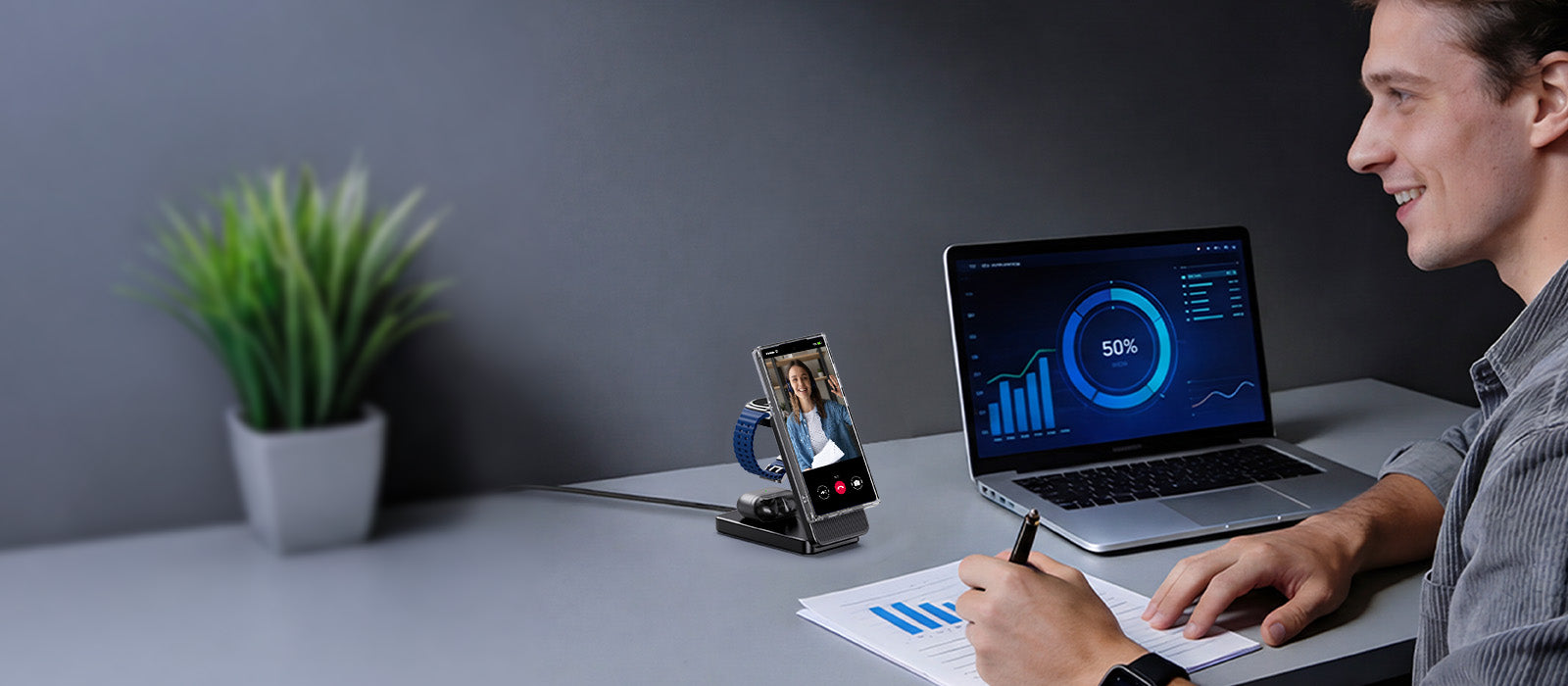
Elecdov's Qi2-certified CE10S 3-in-1 magnetic charging station — part of the growing ecosystem of certified products leveraging the Qi2 standard.
5. China Market — MIIT Regulations & the GB 47372-2026 Standard
China's wireless charging market operates under a distinct regulatory framework that creates both barriers and opportunities for global Qi2.2 adoption. The Ministry of Industry and Information Technology (MIIT) regulates wireless power transmission frequencies and output limits under the SRRC (State Radio Regulation of China) certification framework. China's allocated frequency band for wireless charging (110–205 kHz, operating in the 6.78 MHz ISM band) broadly aligns with the WPC's Qi standard frequency, but local compliance requirements — including China's specific absorption rate (SAR) limits and electromagnetic field (EMF) exposure standards — differ from international norms.
The most significant development in 2026 is the introduction of GB 47372-2026, China's new national standard for wireless charging equipment, which takes effect in the second half of 2026. GB 47372-2026 introduces stricter safety and interoperability requirements for all wireless charging products sold in mainland China, including mandatory SAR testing, enhanced FOD (Foreign Object Detection) specifications, and new labeling requirements. For international brands like Elecdov seeking to enter the Chinese market, GB 47372-2026 compliance is now a prerequisite for retail distribution — adding complexity but also raising the quality bar for the entire market.
The impact on consumers is nuanced. On one hand, GB 47372-2026 raises the cost and time-to-market for new Qi2.2 products in China, potentially slowing initial adoption. On the other hand, the standard formalizes and legitimizes high-power wireless charging (>15W) in the Chinese market, which has historically been fragmented by regional regulations and inconsistent enforcement. Chinese brands — including Huawei, Xiaomi, OPPO, and vivo — have historically used proprietary wireless charging protocols that exceed Qi2.2 wattages (with Huawei's Mate series supporting up to 80W wireless charging). However, all major Chinese brands now offer at least Qi2 compatibility in their international-market devices, and GB 47372-2026's alignment with WPC standards may facilitate broader Qi2.2 adoption in China over the next 12–18 months.
For global accessory brands, the Chinese market presents a compelling opportunity: China represents the world's largest smartphone market by unit volume, and the growing middle class increasingly prioritizes premium accessories. The Elecdov CE19A and W98A lines — which support international Qi2.2 standards — are well-positioned to serve Chinese consumers purchasing international versions of iPhone 17 and Samsung Galaxy S26 devices, which continue to be popular in China's tier-1 and tier-2 cities. Elecdov's approach of maintaining full WPC certification alongside future GB 47372-2026 compliance will be critical for long-term market access.
Key Takeaway: China & Global Qi2.2
While GB 47372-2026 creates short-term regulatory complexity, its alignment with WPC international standards is a structural positive for Qi2.2 adoption in China. International brands with WPC certification and GB 47372-2026 compliance will be best positioned to capture the growing premium wireless charging accessory market in mainland China, which is projected to reach US$2.8 billion by 2028 according to industry analyst estimates.
6. Future Outlook — Qi3, Industry Trends & Elecdov Picks
Looking beyond Qi2.2, the WPC has already begun outlining the roadmap for Qi3 — the next generation of the standard targeting 45W to 65W peak wireless power output. If achieved, Qi3 would effectively eliminate the performance gap between wired and wireless charging for most consumer devices, including laptops and tablets. The WPC's working groups are reportedly focusing on three core challenges for Qi3: thermal management at higher power levels, improved power transfer efficiency over greater distances, and multi-device simultaneous charging with intelligent power allocation.
The industry's trajectory is shaped by several convergent trends. Automotive integration is accelerating, with Qi2.2 and future Qi3 specifications becoming standard in electric vehicles from BYD, NIO, Xpeng, and traditional automakers. Enterprise and infrastructure deployment — wireless charging surfaces in office furniture, airport lounges, and public spaces — is gaining momentum as the WPC's Ki Cordless Kitchen standard demonstrates the broader applicability of wireless power technology. The sustainability narrative also favors wireless charging: improved efficiency reduces energy waste, and the universal standard approach reduces electronic waste from proprietary chargers.
For consumers, the most immediate opportunity in 2026 is upgrading to a Qi2.2-certified multi-device charging station. With four of the top five wireless charging devices in CNET's benchmark being iPhone 17 series models, the ecosystem is ready for a new generation of accessories that deliver on the promise of truly fast wireless power. Elecdov's CE19A 3-in-1 Apple Charging Station stands out as the recommended pick for iPhone 17 users — it delivers full 25W Qi2.2 charging for iPhone, Apple Watch, and AirPods simultaneously, with a compact design and WPC-certified reliability.
Elecdov Recommended: CE19A 3-in-1 Apple Charging Station
The Elecdov CE19A is purpose-built for the Qi2.2 era, delivering 25W MagSafe-compatible wireless charging for the entire Apple ecosystem. Designed for iPhone 17 series, Apple Watch, and AirPods Pro, it features a magnetic alignment system compatible with the Qi2 MPP standard, ensuring optimal coil positioning for maximum charging efficiency. The CE19A's compact 3-in-1 form factor eliminates cable clutter and supports simultaneous charging of all three devices — a key advantage as consumers increasingly seek streamlined, premium charging solutions. WPC certified and backed by Elecdov's two-year warranty.
Frequently Asked Questions
Is Qi2.2 backwards compatible with my old Qi phone?
Yes. Every Qi2.2 charger maintains full backward compatibility with all Qi and Qi2 devices. You can use a Qi2.2 charger with an older iPhone 12 or Samsung Galaxy S21 without any issues — you simply won't get the full 25W output.
How much faster is Qi2.2 compared to Qi2?
Qi2.2 delivers up to 25W — nearly 70% more power than Qi2's 15W cap. In real-world terms, a Qi2.2 charger can replenish an iPhone 17 Pro battery to 55% in 30 minutes, compared to approximately 32% with a standard Qi2 15W charger.
Does Samsung Galaxy S26 support Qi2.2 wireless charging?
Yes. Samsung's Galaxy S26 Ultra and Galaxy S26+ support Qi2 wireless charging, and Samsung's official accessories deliver up to 25W wireless output. However, Samsung's proprietary 45W wireless charging protocol (part of its Super Fast Charging 2.0) requires Samsung-branded chargers and is not Qi2.2 compliant.
What is GB 47372-2026 and does it affect Qi2.2 products in China?
GB 47372-2026 is China's new national standard for wireless charging equipment, effective in the second half of 2026. It introduces stricter safety, EMF, and interoperability requirements. Products sold in mainland China must comply, but international Qi2.2-certified products are broadly aligned with its technical parameters.
When will Qi3 be available, and how much power will it deliver?
Qi3 is currently in the WPC specification development phase. The target output range is 45W to 65W — enough to wirelessly charge laptops and tablets. Industry estimates suggest Qi3-certified products may begin appearing in late 2027 or 2028, pending final specification ratification and testing protocol development.

Elecdov Research Team
Elecdov's in-house research team covering wireless charging standards, market intelligence, and consumer electronics. Elecdov is a WPC member company specializing in Qi2-certified charging accessories for Apple, Samsung, and Android ecosystems.
Ready to Upgrade to Qi2.2?
Explore Elecdov's full range of Qi2-certified 3-in-1 charging stations for Apple and Samsung — available now with global shipping.
Shop Elecdov Qi2 Chargers →


