
Qi2 25W Wireless Charging Revolution: Transforming Power Delivery in 2026
Introduction: The Wireless Charging Paradigm Shift
The wireless charging landscape has undergone a revolutionary transformation in 2026, with the widespread adoption of Qi2 25W magnetic charging technology. This breakthrough represents more than just faster charging speeds—it's a fundamental reimagining of how we power our devices, combining Apple's MagSafe magnetic alignment with the universal Qi standard to create a seamless, efficient, and remarkably fast charging experience.
Unlike previous wireless charging iterations that struggled with efficiency and heat management, the latest Qi2.2 certified chargers from leading brands like Anker, Belkin, ESR, and Ugreen have successfully solved the longstanding challenges that made wireless charging feel like a compromise. The result is a charging ecosystem that finally delivers on the original promise of wireless power: convenience without sacrifice.
Chapter 1: Understanding Qi2 25W Technology
The Magnetic Revolution
At the heart of Qi2's success is its magnetic alignment system, derived from Apple's MagSafe technology. This innovation addresses one of wireless charging's most persistent problems: precise coil alignment. When charging coils aren't perfectly aligned, energy transfer efficiency drops dramatically, leading to slower charging and increased heat generation.
The magnetic attachment system ensures perfect alignment every time, providing:
- Optimal Energy Transfer: Up to 95% efficiency compared to 60-70% in traditional wireless chargers
- Reduced Heat Generation: Lower energy loss means cooler charging temperatures
- Consistent Performance: Reliable charging speeds regardless of device placement
- Enhanced Safety: Precise alignment prevents foreign object detection issues
25W Power Delivery Explained
The jump to 25W wireless charging represents a significant leap from the previous 15W standard. This power increase isn't just about raw speed—it's about enabling new use cases and charging scenarios that were previously impractical with wireless technology.
For iPhone users, 25W Qi2 charging can replenish 50% of battery capacity in just 30 minutes, rivaling many wired fast charging solutions. Samsung Galaxy S26 series users can experience even faster charging, with some models reaching full charge in under an hour—provided they use the correct magnetic accessories.
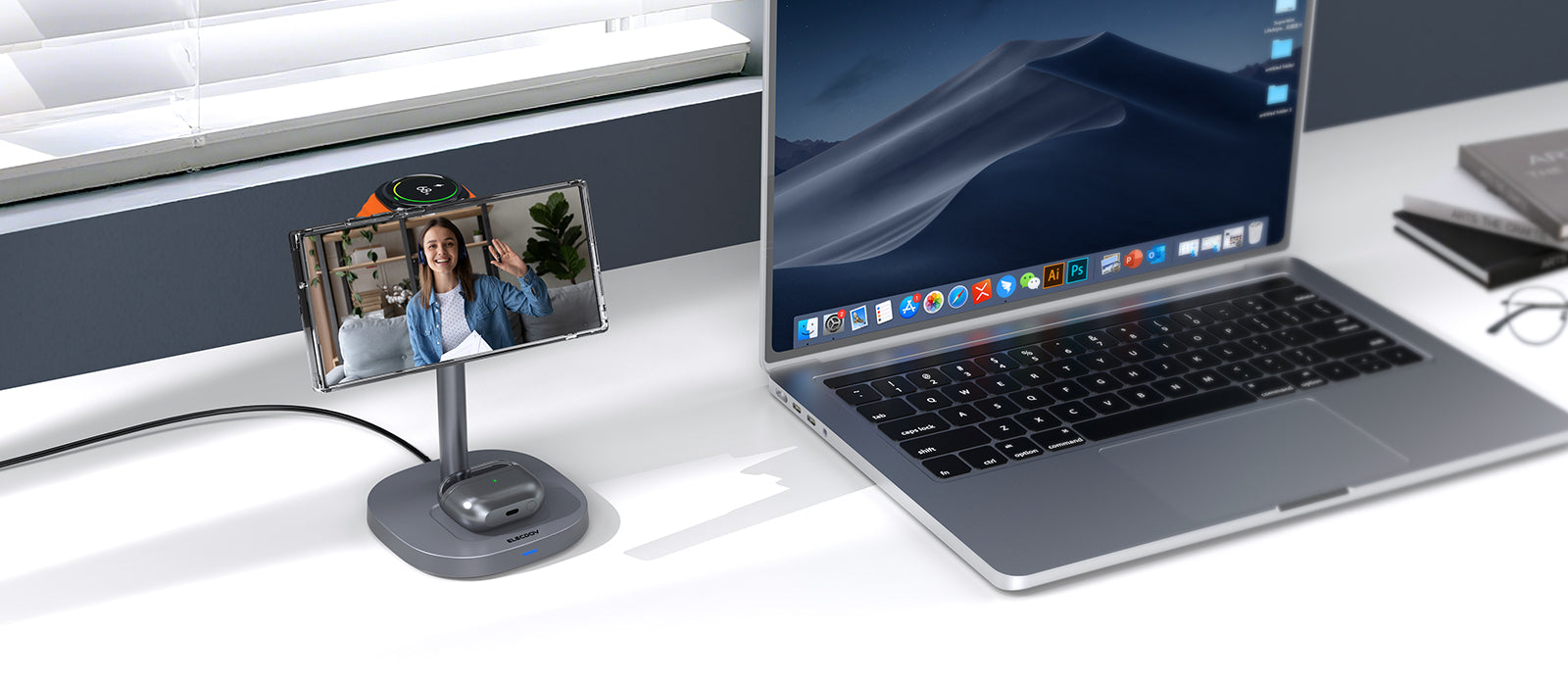
Modern Qi2 charging stations combine sleek design with powerful performance
Chapter 2: AI-Powered Thermal Management
One of the most significant innovations in 2026 Qi2 chargers is the integration of AI-powered thermal management systems. Earlier wireless chargers struggled with heat dissipation, particularly at higher power levels. Excessive heat not only reduced charging efficiency but also posed potential safety risks and accelerated battery degradation.
Leading manufacturers like ESR have introduced revolutionary active cooling solutions:
- Thermoelectric cooling plates that actively dissipate heat
- AI algorithms that dynamically adjust power delivery based on device temperature
- Intelligent charging profiles that optimize speed and safety simultaneously
- Real-time monitoring systems that prevent thermal throttling
Chapter 3: Device Compatibility and Ecosystem Growth
Smartphone Support
The Qi2 ecosystem has expanded dramatically throughout 2026, with virtually all flagship smartphones now supporting the standard. Key adopters include:
- Apple iPhone 17 Series: Full 25W Qi2 support with native MagSafe compatibility
- Samsung Galaxy S26 Series: 25W charging with official Qi2-certified accessories
- Google Pixel 10: 25W Qi2 charging with Google's official Pixelsnap charger
- Motorola Razr 2026: Foldable devices now support Qi2 magnetic charging
Accessories and Wearables
Beyond smartphones, Qi2 technology has expanded to encompass a broader range of devices. Apple Watch, Samsung Galaxy Watch, and various true wireless earbuds now benefit from magnetic alignment, making 3-in-1 charging stations increasingly popular. Devices like the CE20S 3-in-1 Magnetic Charging Station exemplify this trend, offering simultaneous charging for phones, watches, and earbuds.
Shop CE20S 3-in-1 StationChapter 4: Automotive Integration Breakthroughs
2026 marked a pivotal year for automotive wireless charging, with several manufacturers introducing Qi2-compatible charging systems. Nissan became the first automaker to offer Qi2-certified wireless charging pads as standard equipment, addressing longstanding issues with in-car wireless charging.
Traditional automotive wireless chargers suffered from alignment problems caused by vehicle movement and vibrations. Qi2's magnetic attachment system solves this challenge elegantly, ensuring consistent charging even on rough roads. The W103S Magnetic Qi2 Charger offers similar magnetic security for personal vehicles.
Explore W103S Qi2 ChargerChapter 5: Electric Vehicle Wireless Charging Advances
While consumer device charging has seen rapid Qi2 adoption, the electric vehicle sector has witnessed parallel innovations. Porsche's introduction of an 11kW inductive charging system for the 2026 Cayenne EV represents a significant milestone in high-power wireless charging technology.
This system allows EV owners to charge their vehicles by simply parking over a charging pad, eliminating the need for physical cable connections. Although currently limited to Porsche's proprietary system, this technology demonstrates the broader potential of wireless power transfer across transportation sectors.

Wireless charging technology extends beyond smartphones to electric vehicles
Chapter 6: Market Leaders and Product Innovation
Anker's Prime Series
Anker has emerged as a Qi2 innovation leader, introducing several groundbreaking products throughout 2026. Their Prime series 3-in-1 charging stations feature integrated displays showing real-time charging metrics, foldable designs for portability, and active cooling systems. The W98A 3-in-1 Magnetic Station offers similar premium features for iPhone users.
Discover W98A 3-in-1 StationBelkin and Satechi Innovations
Belkin's UltraCharge Pro series and Satechi's foldable charging stands have pushed design boundaries, offering sleek aesthetics without compromising performance. These products demonstrate that premium wireless charging can be both functional and visually appealing.
Chapter 7: Future Outlook and Emerging Trends
Qi2.2 and Beyond
The Wireless Power Consortium continues developing enhanced standards, with Qi2.2 specifications expected to support even higher power levels—potentially reaching 30-40W by 2027. This evolution will further narrow the gap between wired and wireless charging speeds.
Room-Scale Wireless Charging
While still in development stages, room-scale wireless charging technology continues progressing. Companies like Wi-Charge and Ossia are developing systems that could potentially charge devices across an entire room without physical contact, representing the ultimate goal of true wireless power.

Conclusion: Embracing the Wireless Future
The Qi2 25W wireless charging revolution represents more than incremental improvement—it's a fundamental transformation in how we interact with power delivery. With magnetic alignment ensuring efficiency, AI-powered thermal management solving heat issues, and widespread device compatibility, wireless charging has finally matured into a technology that rivals wired solutions.
For consumers seeking to embrace this wireless future, products like the W98S 3-in-1 Station for Samsung or the CE19A for Apple devices offer excellent entry points into the Qi2 ecosystem. As technology continues advancing, the days of tangled charging cables may soon become a distant memory.
Shop W98S for Samsung Shop CE19A for Apple


